The Interview Changes Everything
Your GPA and prerequisites get you the interview invitation. The interview determines whether you get in. Most PharmD programs consider the interview a critical component of their admissions process — and with the PCAT discontinued, it carries more weight than ever. It's where they evaluate the qualities that transcripts can't capture: communication skills, professionalism, ethical reasoning, and genuine commitment to the profession.
Two Formats You Need to Know
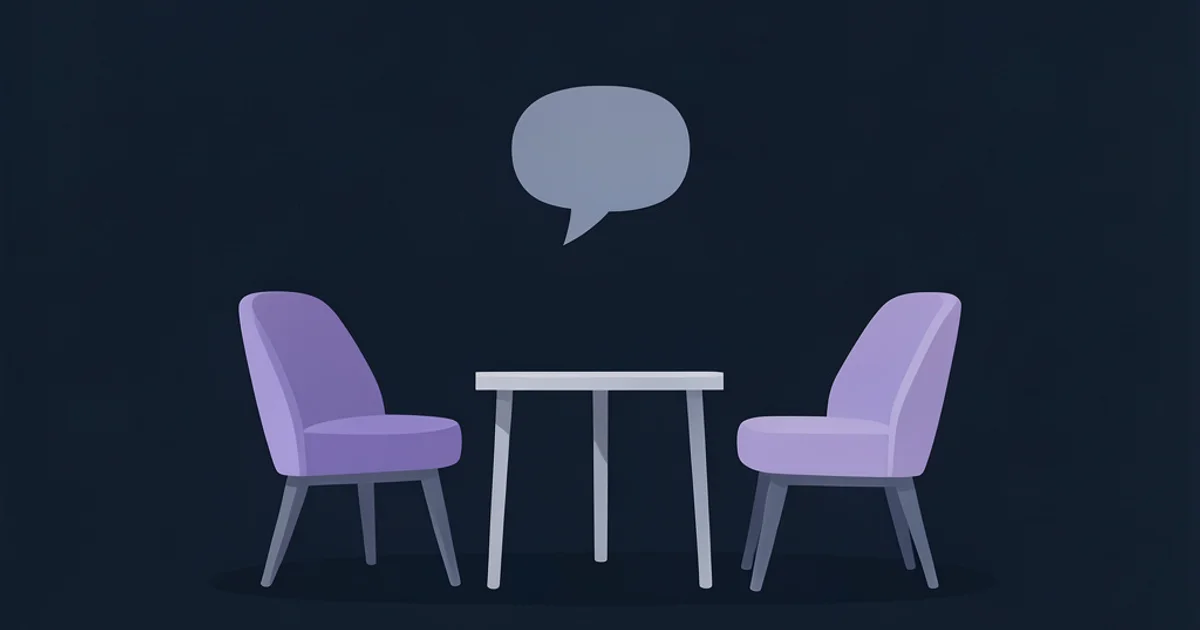
Traditional Interview
A one-on-one or panel conversation lasting 20–45 minutes. You'll sit across from one to three interviewers — typically faculty members, practicing pharmacists, or admissions staff — and answer questions about your background, motivation, and fit for the program.
Traditional interviews are conversational. The best ones feel like a professional discussion, not an interrogation. Interviewers are assessing whether you can articulate your thoughts clearly, respond to unexpected questions, and carry yourself with the maturity expected of a future healthcare professional.
Multiple Mini Interview (MMI)
A circuit of 6–10 stations, each lasting 5–8 minutes. At each station, you receive a prompt — an ethical scenario, a teamwork exercise, a role-play with a standardized actor, or a question about healthcare policy — and respond with minimal preparation time (usually 2 minutes to read the prompt before entering).
MMI is designed to reduce the influence of one bad question or one interviewer's bias. Your score is aggregated across all stations, so a weak performance at one doesn't sink your entire interview. Programs increasingly favor MMI because it's a better predictor of clinical performance than traditional interviews.
What They're Really Evaluating
Regardless of format, interviewers assess these core competencies:
- Communication: Can you explain complex ideas clearly? Do you listen before responding? Can you adapt your communication style to different audiences?
- Ethical reasoning: When presented with a dilemma, do you identify the competing values? Do you reason through trade-offs rather than jumping to black-and-white conclusions?
- Professionalism: Are you punctual, appropriately dressed, respectful of everyone you encounter — from the receptionist to the dean? Small behaviors matter more than people realize.
- Self-awareness: Can you discuss your weaknesses honestly? Do you know why you're pursuing pharmacy and not another health profession?
- Knowledge of pharmacy: You don't need to recite drug mechanisms, but you should understand what pharmacists do, current challenges facing the profession, and why this career appeals to you.
See where your numbers are actually competitive.
AdmitBase compares your GPA to admitted students at 140+ US PharmD programs — so you know your real chances before you apply.
Get Started Free →The Questions You Will Actually Be Asked
These are the questions that appear, in some form, at nearly every PharmD interview. Prepare each — out loud — without memorizing scripts.
Motivation and background
- "Why do you want to be a pharmacist?" — The most fundamental question. Answer with specific personal experience, not generic praise of healthcare. See our personal statement guide for how to articulate this.
- "Why pharmacy and not medicine or nursing?" — The standard follow-up, and where generic answers die. Show you understand what is distinct about the pharmacist's role: medication expertise, accessibility, the last check between prescription and patient.
- "Tell me about yourself." — A 90-second professional summary. Education, relevant experience, why you're here. Not your life story.
- "What do pharmacists actually do beyond dispensing?" — Immunizations, MTM (medication therapy management), counseling, collaborative practice, clinical rounds. If your answer is "count pills," the interview is over.
- "What is your greatest weakness?" — Name a real one, plus what you are doing about it. Interviewers score self-awareness, not perfection.
Ethical and scenario questions
- "A patient presents a prescription you suspect is fraudulent or inappropriate. What do you do?" — Walk through verification with the prescriber, patient safety first, professional judgment over confrontation.
- "You discover a dispensing error — yours or a colleague's. What now?" — Patient safety, disclosure, and reporting systems. Never an answer that hides the error.
- "A colleague is cutting corners on safety checks. How do you handle it?" — Direct conversation first, escalation if it continues; patient safety outranks loyalty.
- "A patient cannot afford their medication. What options do you explore?" — Generics, therapeutic alternatives with the prescriber, manufacturer assistance programs, discount programs. Tests both empathy and practical knowledge.
- "A patient refuses counseling or a vaccine. How do you respond?" — Respect autonomy, offer information without lecturing, keep the door open.
Behavioral and teamwork
- "Describe a time you worked through a disagreement on a team." — A specific example with a resolution, not a hypothetical.
- "Tell me about a time you failed. What did you learn?" — Own the failure; the score is in the learning.
- "How do you handle criticism?" — Give an example of feedback you actually implemented.
Healthcare issues and program fit
- "What current issue in pharmacy interests or concerns you?" — Drug pricing, pharmacist scope-of-practice expansion, the opioid epidemic, pharmacy deserts, PBM reform. You don't need expert opinions, but you must be informed.
- "Where do you see the profession in ten years?" — Provider status, expanded clinical roles, automation of dispensing. Shows you chose the career with open eyes.
- "Why this program?" — Research the specific school. Mention clinical rotation sites, faculty research, curriculum features, or mission alignment. Generic answers here suggest you didn't care enough to prepare.
- "What questions do you have for us?" — Never "none." Have two or three ready (see preparation below).
How to Prepare Without Over-Rehearsing
- Practice out loud: Answering questions in your head is not the same as saying them. Practice with a friend, mentor, or career counselor. Record yourself and watch it back — uncomfortable, but effective.
- Know your application: Reread your personal statement, experience descriptions, and any supplemental essays. Interviewers will reference them.
- Stay current: Read pharmacy news for the two weeks before your interview. Know what's happening with drug pricing, pharmacist prescribing authority, and any major FDA decisions.
- Prepare questions to ask: Have 2–3 thoughtful questions ready. Not "what's the class size" (that's on the website) — something like "how do students typically find their clinical rotation preferences here?" or "what's the program doing to address X emerging area?"
Logistics
Dress professionally — business formal, not business casual. Arrive 15 minutes early. Bring a printed copy of your application. If the interview is virtual, test your technology the day before, ensure your background is clean, and make eye contact with the camera, not the screen.
After the interview, send a brief thank-you email within 24 hours to your primary interviewer or the admissions contact. Keep it short, genuine, and specific to something discussed during the interview.
Practice your pharmacy interview out loud.
AdmitBase's AI mock interviews run timed panel questions with follow-up probes and scored feedback on judgment, communication, and professionalism. Your first question is free.
Try a Free Practice Question →